


What’s the Difference Between Light, Medium, and Dark Roast Coffee?

Ever been baffled in the coffee aisle, staring at all those "French Roast," "City Roast," and "Breakfast Blend" labels? Me too! The magic really happens during roasting, when raw dense beans with a grassy smell turn into the tasty, fragrant stuff we drink every day.
So, what's the deal with light, medium, medium-dark, and dark roast coffees? Is dark roast actually more caffeinated? And which works best for your morning brew in a French press or pour-over?
This guide cuts through the confusion. We dive into the roasting process, highlight each roast's unique taste, clear up coffee misconceptions, and even give you a handy chart to help pick the perfect beans.

Difference between light, medium, and dark roast coffee?
The main differences between the roasts show up in their flavors, acidity, bodies, and oil content. This depends on how long the beans are roasted.
For the light roast, it gets roasted the least amount of time. This results in high acidity, fruity and bright flavors, a light body, and no oil on the surface. It keeps its unique coffee characteristics the best too.
With the medium roast, the beans are cooked longer to get a balanced flavor and medium acidity. Plus, it has a slightly heavier body than light roast but still has no oil on the surface. Many appreciate its sweet, caramel-like taste.
Moving on to the medium-dark roast, the beans cook past the first crack. They develop richer, heavier bodies with bittersweet tastes and slight surface oils. You'll enjoy notes of dark chocolate and spices in each sip.
Finally, dark roast gets the longest cook time. It ends up with low acidity and a very heavy body, plus an oily surface sheen. In these beans, the smoky, bitter, bold flavors from roasting overwhelm their original taste completely.
The Magic of the Roast: From Green Bean to Brown Gold
To truly understand the difference between coffee roasts, you have to understand a little bit of the science behind the roasting process.
Coffee beans are actually seeds found inside the fruit (cherry) of the coffee plant. When harvested and processed, they are completely green. Green coffee beans have almost no discernible coffee flavor; they smell earthy, woody, and grassy.
When exposed to extreme heat in a coffee roaster, chemical reactions occur. The most important of these is the Maillard reaction (the same reaction that browns a steak or bakes a loaf of bread) and caramelization. As the beans heat up, their natural sugars caramelize, and moisture evaporates.

During the roasting process, you will hear distinct "cracks" (similar to popcorn popping):
First Crack: Occurs around 385°F (196°C). The bean expands, moisture escapes, and the coffee is officially considered a "light roast."
Second Crack: Occurs around 435°F (224°C). The bean's cellular structure begins to break down, and natural oils are pushed to the surface. This marks the transition into dark roast territory.
Let’s dive deep into the specific characteristics of each roast level.
1. Light Roast Coffee: Bright, Complex, and Fruity
Light roast coffee sees the shortest roast time, ending just after the "first crack." Since it gets the least heat exposure, it keeps those distinct, original flavors that show where it came from. Want to taste the soil, altitude, and climate—the coffee’s terroir? Light roast really shines for that.
Characteristics of Light Roast
Color: Light brown, similar to the color of milk chocolate or toasted oats.
Surface: Dry, with absolutely no oil on the surface of the bean.
Body: Light and tea-like. It doesn't coat your mouth the way darker roasts do.
Acidity: High. In coffee terms, acidity doesn't mean sour; it means "brightness" or "crispness."
Flavor Profile: Floral, fruity, citrusy, and herbal. You might taste notes of jasmine, blueberry, lemon, or bergamot.
Common Industry Names: Light City, Half City, Cinnamon Roast, New England Roast.
Who is this for? Coffee connoisseurs who enjoy complex, bright flavors and prefer brewing methods like pour-over (V60, Chemex) which highlight delicate tasting notes.
2. Medium Roast Coffee: Balanced, Sweet, and Approachable
Medium roast is super popular - it's the go-to choice for many coffee lovers. It strikes the perfect balance between light and dark roasts, offering a mellow taste that appeals to a wide range of palates. During the process, beans get heated after the first crack but are pulled before the second one starts. This lets the natural sugars caramelize more, leading to a sweet and well-balanced brew that hits the spot.
Characteristics of Medium Roast
Color: Medium brown, richer than a light roast.
Surface: Dry, still lacking surface oils.
Body: Medium. It feels a bit heavier and rounder in the mouth.
Acidity: Medium. The sharp brightness of the light roast is smoothed out.
Flavor Profile: Balanced, sweet, and smooth. You will typically find notes of milk chocolate, brown sugar, caramel, toasted nuts, and mild berry. It retains some origin flavors while taking on the sweet flavors of the roasting process.
Common Industry Names: City Roast, American Roast, Breakfast Blend.
Who is this for? This one's for the everyday coffee lover who uses a standard home automatic drip machine. If you prefer sipping black coffee that isn't too harsh, go for medium roast—it's perfect for you.

3. Medium-Dark Roast Coffee: Rich, Full-Bodied, and Bittersweet
Often overlooked in basic "light versus dark" comparisons, medium-dark roast coffee stands out as distinct and highly sought after. It's taken off the heat right at the start or middle of the "second crack."
During this roasting phase, the original flavors of the beans get overshadowed. The internal oils start moving towards the surface, changing both the texture and taste of the final cup.
Characteristics of Medium-Dark Roast
Color: Dark, rich brown.
Surface: You will see a slight sheen of oil on the surface of the beans, though they won't be completely coated.
Body: Heavy and robust.
Acidity: Low. The bright notes are almost entirely roasted out.
Flavor Profile: Deep, bittersweet, and rich. Expect pronounced notes of dark chocolate, baking spices (like nutmeg or clove), molasses, and toasted almonds. The sweetness is less like sugar and more like dark cocoa.
Common Industry Names: Full City Roast, Vienna Roast, After Dinner Roast.
Who is this for? This one's for folks who enjoy a strong cup of coffee that mixes well with milk or cream. It's great in French Press or Aeropress, so give it a try if you're into those brewing methods.
4. Dark Roast Coffee: Bold, Smoky, and Classic
When you think of that classic diner coffee or a traditional Italian espresso, you're thinking of dark roast. Dark roast coffee undergoes a lengthy roasting process until it hits or even goes past the second crack — that’s at extremely high temperatures.
At this point, any hint of the original coffee flavor disappears. All you taste is the result of the intense roasting. The beans get caramelized, almost charred, changing completely from their initial flavor profile.
Characteristics of Dark Roast
Color: Dark brown to almost black.
Surface: Highly oily and glossy. The beans will look shiny.
Body: Very heavy, syrupy, and thick.
Acidity: Almost non-existent.
Flavor Profile: Smoky, earthy, bold, and bitter. You might taste notes of dark caramel, charred wood, black pepper, and dark cocoa. There are no floral or fruity notes left.
Common Industry Names: French Roast, Italian Roast, Espresso Roast, Continental Roast.
Who is this for? Coffee lovers who love a strong brew, where the coffee flavor doesn't get drowned out, choose dark roast. It's less acidic and more bitter, standing up to cream, milk, and syrups while keeping that robust coffee taste.
The Ultimate Coffee Roast Comparison Chart
To make choosing your next bag of coffee as easy as possible, here is a side-by-side comparison of the four main roast levels:
Feature | Light Roast | Medium Roast | Medium-Dark Roast | Dark Roast |
Bean Color | Light Brown | Medium Brown | Rich Dark Brown | Very Dark Brown/Black |
Surface Oil | None | None | Slight sheen | Highly oily/glossy |
Roast Time | Stops after 1st Crack | Between 1st and 2nd Crack | Beginning of 2nd Crack | Past the 2nd Crack |
Acidity (Brightness) | High | Medium | Low | Very Low/None |
Body (Mouthfeel) | Light, tea-like | Medium, smooth | Heavy, rich | Very heavy, syrupy |
Flavor Profile | Fruity, floral, citrus | Chocolate, caramel, nuts | Dark cocoa, spice | Smoky, bitter, earthy |
Origin Flavor | Highly prominent | Noticeable, but blended | Barely noticeable | Overpowered by roast flavor |
The Great Caffeine Myth: Does Dark Roast Have More Caffeine?
A common myth about coffee is that dark roast has more caffeine because it has a bolder flavor. But that's wrong. The roasting process actually removes some caffeine, so a single light roast bean has more caffeine than a single dark roast bean.
Yet, the actual caffeine content in your brew varies based on how you measure the beans, not their roast level.
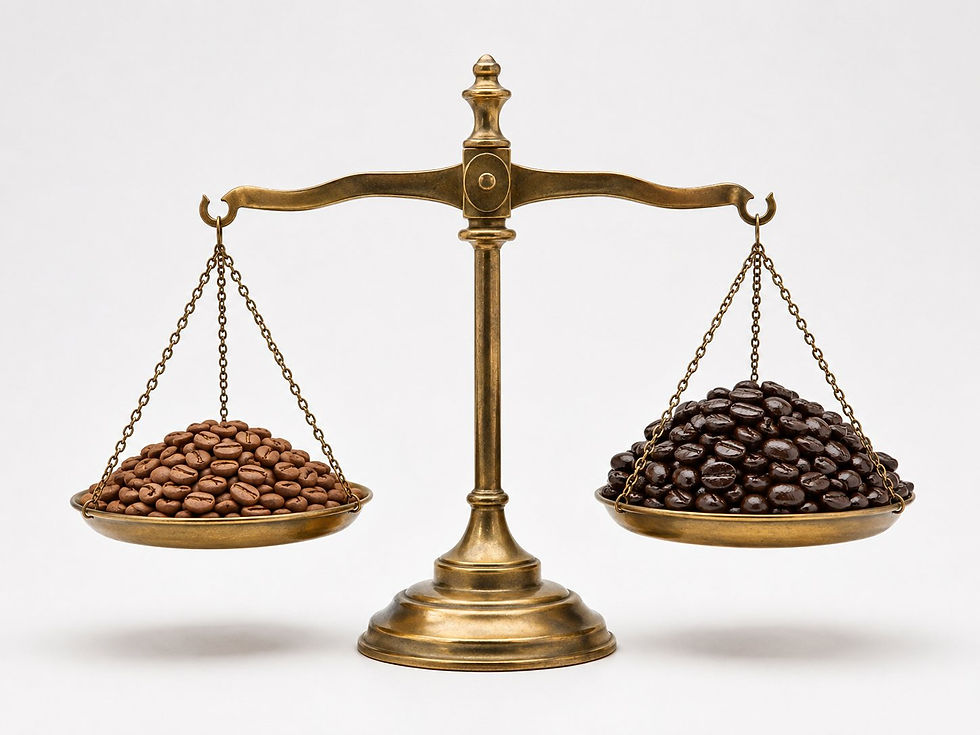
During the roasting process, beans lose mass (water weight) and expand in size. Dark roast beans are larger and lighter in weight than light roast beans.
If you measure by SCOOP (Volume): Light roast coffee is denser and smaller. A single scoop will contain more beans than a scoop of dark roast. Therefore, light roast has more caffeine when measured by volume.
If you measure by WEIGHT (Scale): If you weigh out 20 grams of light roast and 20 grams of dark roast, you will need slightly more dark roast beans to reach 20 grams because they weigh less. Therefore, the caffeine content is virtually identical when measured by weight.
The Verdict: If you need a serious morning jolt and you measure your coffee with a scoop, reach for a light roast.
Pairing Your Roast with the Right Brewing Method
Just as you wouldn't use a delicate wine glass for a pint of stout beer, certain coffee roasts shine brightest when paired with specific brewing methods.
1. Pour-Over (Chemex, V60, Kalita Wave)
Best Roast: Light and Medium.
Why: Gravity-fed, paper-filter methods filter out heavy oils and highlight the delicate, complex, and bright notes of lighter roasts.
2. Automatic Drip Machine
Best Roast: Medium and Medium-Dark.
Why: Drip machines provide a steady, reliable extraction that perfectly complements the balanced, chocolatey, and sweet notes of a medium roast.

3. French Press
Best Roast: Medium-Dark and Dark.
Why: Immersion brewing with a metal mesh filter allows the coffee's natural oils and heavy body to remain in the cup. The bold, rich flavors of darker roasts are amplified beautifully here.
4. Espresso Machine
Best Roast: Medium-Dark and Dark.
Why: Espresso requires coffee that can withstand high pressure and rapid extraction without tasting overly sour. Darker roasts provide the classic crema and robust flavor needed to punch through milk in lattes and cappuccinos.
A Note on Coffee Freshness and Storage
Getting the roast levels right is important for storage too. With dark roast coffee beans, the heating is so intense that their structure basically breaks apart, pushing those internal oils to the surface.
These oils spoil quicker when in contact with oxygen, way faster than what happens with dense light roast beans that keep their gases longer inside.
This means dark roasts lose freshness more rapidly and are best used within 2 to 3 weeks after roasting. Light roast coffee stays fresher longer though, lasting you about 4 to 6 weeks from its roast date.
Pro Tip: Always buy whole beans, store them in an opaque, airtight container at room temperature, and only grind what you need immediately before brewing.
Frequently Asked Questions
Is light or dark roast better for a sensitive stomach?
Dark roast coffee wins for folks with sensitive stomachs. The beans get roasted longer, which wipes out those zingy acidic bits. On top of that, the extra roasting spawns something called N-methylpyridinium (NMP). This stuff helps keep your tummy from making too much acid on its own.
Which coffee roast is the healthiest?
Light roast coffee is thought to be the healthiest because it's got more chlorogenic acid - thanks to shorter roasting times. This antioxidant protects cells and cuts down on inflammation, but remember, all roast types give health perks when you enjoy them in moderation.
Why does dark roast coffee taste burnt?
Dark roast coffee can end up tasting burnt if beans are roasted too long after the second crack. The cellulose turns to carbon then, changing that nice smoky flavor to one that's more like ash. If your coffee reminds you of ashes rather than giving off a pleasant smokiness, it's probably either low quality or over-roasted.
Can I make espresso with a light roast coffee?
Sure, you can use a light roast to make espresso, sometimes called "blonde espresso." This yields a shot that's super acidic and fruity. But it's harder to get right compared to a dark roast and isn't for everyone. So, while possible, it's pretty specific and an acquired taste.
Conclusion
To really amp up your morning routine, learn the differences between light, medium, medium-dark, and dark roast coffees.
Go for a Light Roast if you enjoy something fruity and zesty with tons of acidity and distinct origin flavors. For a nice, everyday sip that’s sweet and well-balanced, opt for a Medium Roast. Like a richer, fuller brew with notes of dark chocolate? Try a Medium-Dark Roast. Into bold, smoky flavors that stand up to cream and sugar? Grab a Dark Roast instead.
At the end of the day, the very best roast boils down to what you think tastes great. Give each type a try by sampling some of all the varieties—you'll soon find your perfect match. Cheers to happy brewing!


